
sales@aooser.com
13580725992
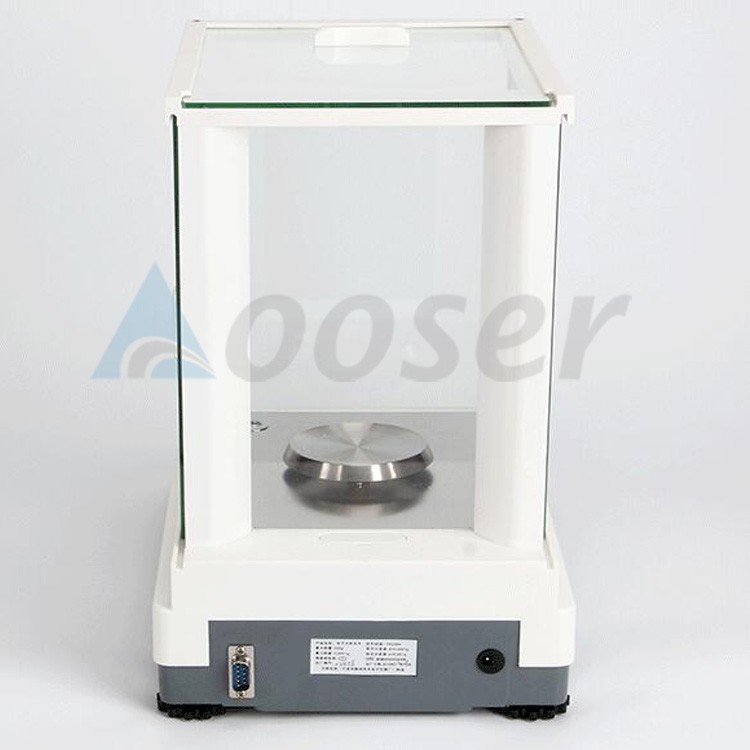
In the bustling chemistry and materials science labs of universities worldwide, a quiet revolution is underway. The drive for better batteries—longer-lasting, faster-charging, and safer—powers countless student theses and faculty research projects. At the very core of this intricate work, you’ll often find a fundamental yet critical tool: the FA2004 Electronic Analytical Balance.
While its specs (200g capacity, 0.1mg readability) might seem standard, for battery researchers, the FA2004 is not just a scale; it’s the foundational instrument for accuracy and reproducibility. Here’s how this precise tool becomes indispensable in the quest for the next generation of energy storage.
Why Precision is Non-Negotiable in Battery Science
Battery performance is exquisitely sensitive to the mass and ratios of its components. A minuscule deviation in the active material, conductive additive, or binder can significantly alter key properties like capacity, cycle life, and internal resistance. The 0.1 mg (0.0001g) sensitivity of the FA2004 is therefore not a luxury—it’s a necessity.
Key Applications in a University Battery Lab:
Electrode Fabrication – The Heart of the Battery:
Slurry Weighing: Preparing the electrode slurry requires precise masses of active material (e.g., LiFePO4, NMC, graphite), conductive carbon (like Super-P), and polymer binder (PVDF). The FA2004 ensures the exact recipe is followed, batch after batch.
Current Collector Loading: After coating and drying, researchers precisely weigh the current collector (aluminum/copper foil) before and after coating to calculate the active mass loading (mg/cm²)—a critical parameter directly linked to energy density.
Electrolyte Preparation & Additive Dosing:
Formulating liquid or solid electrolytes requires accurate weighing of salts (e.g., LiPF₆), solvents (EC/DMC), and functional additives. Even trace amounts of an additive (e.g., 2% by weight) must be introduced with absolute precision, a task perfectly suited for the FA2004.
Assembly of coin cells or Pouch Cells:
Before sealing a test cell (like a CR2032 coin cell), researchers weigh the individual components: the precisely cut electrode discs, the separator, and sometimes even the electrolyte to be injected. This ensures consistency across all test cells in an experiment.
Electrochemical Performance Analysis:
Metrics like Specific Capacity (mAh/g) are calculated per gram of active material. An inaccurate mass measurement from an inferior balance renders this crucial performance indicator meaningless. The FA2004 provides the reliable mass data that underpins all published graphs and conclusions.
Materials Synthesis & Characterization:
For students synthesizing their own battery materials (e.g., via sol-gel or solid-state methods), precise weighing of precursors is the first critical step. The success of the synthesis often hinges on this initial accuracy.
Best Practices for Battery Lab Use:
Anti-Static Measures: Many battery materials (like carbon black and polymers) are highly electrostatic. Use an anti-static kit (ionizer blower) alongside the balance to prevent powders from flying and ensure stable readings.
Controlled Environment: Always work with the draft shield closed. Minimize air currents and vibrations, especially when weighing ultra-lightweight components like separators or fibrous carbon electrodes.
Meticulous Calibration: Implement a strict calibration schedule using certified weights. Document every calibration. This practice is essential for research integrity and repeatability—cornerstones of the scientific method taught in universities.
Proper Tools: Use fine-tip spatulas, micro-scoops, and weighing boats or vials. Never pour powders directly over the balance pan.
The FA2004: More Than a Tool, A Teacher
For undergraduate and graduate students, the FA2004 serves as a hands-on lesson in the importance of metrology in science. It teaches that groundbreaking research in cutting-edge fields like energy storage is built on a foundation of painstaking, fundamental measurement techniques.
In the dynamic environment of a university battery lab, where curiosity drives innovation, the FA2004 provides the unwavering accuracy that allows students and researchers to trust their data, validate their hypotheses, and contribute meaningfully to the future of energy technology.
Are you a student or researcher using an analytical balance for battery work? What tips have you found most crucial? Share your experiences in the comments!
Contact: Jason Wang
Phone: 13580725992
E-mail: sales@aooser.com
Whatsapp:13580725992
Add: No.429 Guangming Road, Shenzhen City, Guangdong Province
We chat