
sales@aooser.com
13580725992
The Intimate Relationship Between Thermostatic Baths and SSR Viscometers: Precision in Partnership
In the world of material science, petrochemicals, food production, and pharmaceuticals, accurately measuring viscosity is not just a routine task—it’s a critical parameter that dictates product quality, performance, and process efficiency. Two instruments often sit side-by-side in labs dedicated to these measurements: the unassuming thermostatic bath and the sophisticated shear rate-controlled viscometer (SSR). While one may seem like a simple supporting act, their relationship is a fundamental partnership for achieving reliable, repeatable, and meaningful data.
The Indispensable Foundation: The Thermostatic Bath
A thermostatic bath, or circulating bath, is the guardian of temperature. Its sole purpose is to create and maintain a precise, uniform thermal environment for a sample or sensor. It works by circulating a fluid (often water, oil, or silicone) through an external jacket or chamber, holding its temperature within a fraction of a degree of the setpoint.
Why is this so crucial for viscosity?
Viscosity is intensely temperature-sensitive. For most fluids—from engine oils and polymer solutions to honey and creams—a small change in temperature can cause a significant change in viscosity. For example, an engine oil’ viscosity can drop by over 50% with a 30°C temperature increase. Measuring viscosity without strict temperature control is like trying to measure length with a stretching ruler; the results are inconsistent and incomparable.
The Star Performer: The SSR (Shear Rate-Controlled) Viscometer
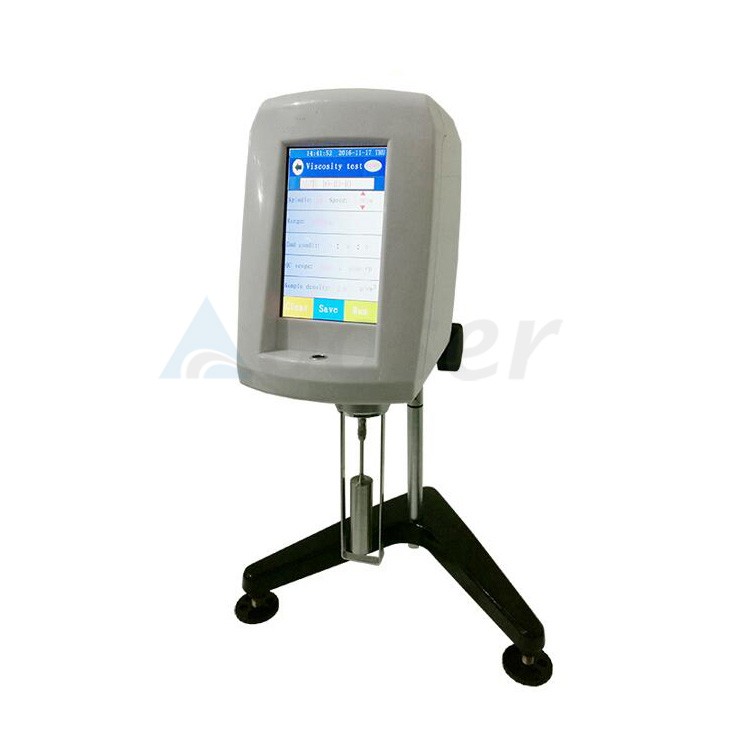
The SSR viscometer is the primary measuring device. Unlike simple viscometers that may use a fixed force, an SSR instrument precisely controls the shear rate (the speed gradient applied to the fluid) and measures the resulting shear stress (the fluid’s resistance). This allows it to characterize a fluid’s complete flow behavior—whether it’s Newtonian (constant viscosity) or non-Newtonian (where viscosity changes with applied force, like ketchup or paint).
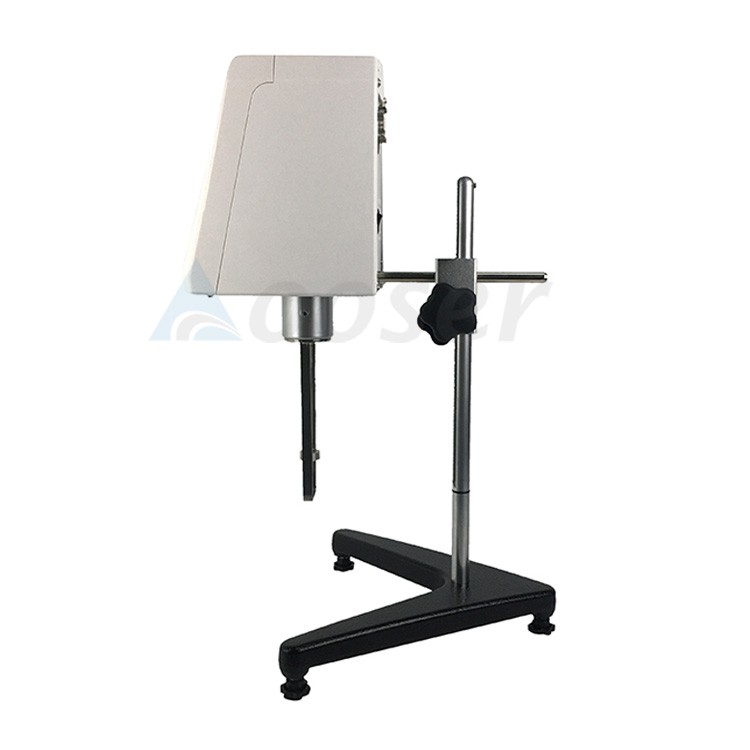
Key measurements from an SSR include:
Absolute Viscosity: The ratio of shear stress to shear rate.
Yield Stress: The force needed to start a material flowing.
Thixotropy: The property of becoming thinner under constant shear and recovering thickness when still.
The Synergistic Relationship: More Than Just a Warm Bath
This is where the partnership shines. The thermostatic bath is not merely “heating up” the SSR viscometer’s sample. It enables the core functionality of the SSR in three vital ways:
1. Enabling Absolute Measurement: An SSR viscometer’s precision is meaningless without temperature stability. The bath provides the constant, known temperature required to convert the instrument’s raw torque and rotational speed readings into a true, absolute viscosity value (e.g., in mPa·s or cP).
2. Ensuring Data Comparability: Standards like ASTM D445 (for petroleum products) or ISO 2555 (for resins) specify exact test temperatures (e.g., 40°C or 100°C for oils). The thermostatic bath ensures every measurement, whether taken today or next year, adheres to this exact condition, enabling reliable quality control and compliance.
3. Unlocking Advanced Rheological Studies: For non-Newtonian fluids, temperature and shear are intertwined influencers. Studying a lubricant’s performance across a winter cold start and a running engine temperature requires viscosity profiles at multiple, precisely held temperatures. The bath makes these complex, multi-temperature rheological models possible.
Aspect | Thermostatic Bath | SSR Viscometer |
Primary Role | Control the temperature environment. | Control the shear rate and measure response. |
Key Function | Stability, uniformity, and precision of temperature. | Precision in applying deformation and measuring resistance. |
Impact on Viscosity | Directly and powerfully affects the magnitude of the result. | Reveals the behavioral character of the fluid. |
Analogy | The meticulously controlled laboratory environment. | The sensitive, probing scientific instrument. |
Conclusion: A Symphony of Control
In essence, the thermostatic bath and the SSR viscometer work in concert to isolate variables. The bath meticulously controls for temperature, eliminating its dramatic effect as a variable. This allows the SSR viscometer to perform its true function: to precisely interrogate the fluid’s response to shear and reveal its intrinsic viscous and rheological properties.
For any lab serious about viscosity, investing in a high-precision SSR viscometer without an equally capable thermostatic bath is an incomplete solution. It is the silent, steady partnership of these two instruments that transforms a simple viscosity check into a powerful, reliable, and standardized scientific characterization—the bedrock of innovation and quality assurance in countless industries.
Contact: Jason Wang
Phone: 13580725992
E-mail: sales@aooser.com
Whatsapp:13580725992
Add: No.429 Guangming Road, Shenzhen City, Guangdong Province
We chat