
sales@aooser.com
13580725992
In a study published in Chemical Science in January 2026, researchers at North University of China and the Chinese Academy of Sciences developed a novel "carbon bridge" strategy to anchor ultra-low-loading platinum nanoparticles (just 0.032 mg cm⁻²) onto carbon-encapsulated nanoporous CoFe₂O₄. The resulting Pt/np-CFO@C electrode exhibited a remarkably low oxygen evolution–oxygen reduction potential gap of 0.7 V, and the assembled rechargeable zinc-air battery delivered a specific capacity of 781 mAh g⁻¹, a power density of 185 mW cm⁻², and a cycling life exceeding 1,400 hours. The carbon layer serves a dual purpose: it bridges the spinel support and platinum while promoting the loading of more zero-valent, catalytically active platinum species.
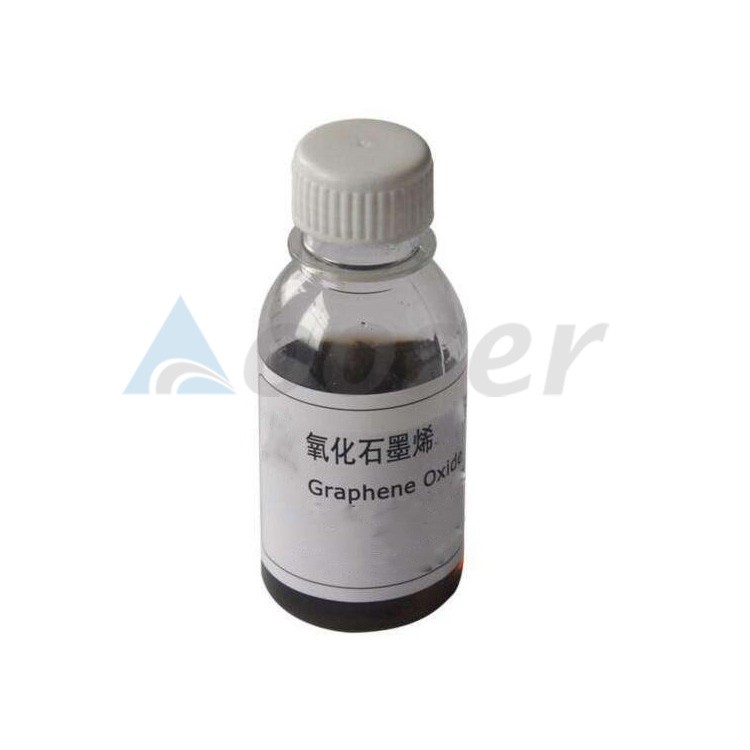
A separate study from Nantong University, published in Inorganic Chemistry in June 2026, addressed the longstanding trade-off between platinum catalyst activity and stability. By wrapping hollow carbon sphere–supported platinum nanoparticles in a graphene oxide shell and thermally reducing it, the team induced a precisely tunable compressive lattice strain of 3.6% in the platinum(111) lattice. This strain engineering shifted the d-band center upward and optimized oxygen intermediate adsorption, resulting in a 25 mV positive shift in half-wave potential. When deployed as a zinc-air battery cathode, the HCS–Pt@rGO catalyst maintained an ultrastable discharging voltage of 1.41 V even after 500 hours of operation—equivalent to 3,000 discharge–charge cycles.
Beyond conventional cell architectures, a paradigm-shifting approach published in Energy Storage Materials in August 2026 demonstrated that platinum can serve as a wireless bipolar electrode within the electrolyte of membraneless zinc-air batteries. By introducing conductive platinum and zinc bipolar electrodes in various geometric configurations, the researchers achieved up to 64% reduction in ohmic resistance, over 80% increase in volumetric power density, and up to 300 mV decrease in overpotential. The induced anodic and cathodic poles on the bipolar electrodes created new charge-transfer pathways that substantially enhanced battery performance.
In the electric vehicle space, researchers at Florida International University have patented a high-density lithium battery design that relies on platinum and related chemical elements to boost energy storage. The innovation is estimated to potentially triple the mileage between charging stops—from approximately 300 miles to significantly higher ranges. Lion Battery Technologies Inc., formed in 2019 by two multinational corporations, has invested $3 million to commercialize the technology, with plans to manufacture products for consumer vehicles within three years.
The broader scientific community has also taken note of platinum group metals' potential. A 2025 mini-review in the Journal of Electroanalytical Chemistry highlighted the significance of platinum group metal–based electrodes for high-performance lithium-oxygen batteries, discussing both the opportunities and challenges for these materials in next-generation energy storage.
Despite platinum's advantages, its high cost and scarcity remain barriers to widespread adoption. Current research directions—including ultra-low-loading strategies, strain engineering, and bipolar electrode configurations—aim to maximize platinum utilization efficiency while maintaining performance. As these innovations mature, platinum electrodes are poised to play an increasingly vital role in the transition toward high-performance, sustainable battery systems for transportation, grid storage, and portable electronics.
Contact: Jason Wang
Phone: 13580725992
E-mail: sales@aooser.com
Whatsapp:13580725992
Add: No.429 Guangming Road, Shenzhen City, Guangdong Province
We chat