
sales@aooser.com
13580725992
As the global battery industry pushes the boundaries of energy density and fast charging, thermal management remains the critical bottleneck. In response to this challenge, a new class of high-performance substrate material—310S stainless steel metal foil—is gaining significant traction among engineers and manufacturers aiming to enhance the safety, longevity, and structural integrity of next-generation power sources.
Traditionally, battery current collectors have relied on copper for anodes and aluminum for cathodes. However, the rise of solid-state batteries (SSBs), lithium-sulfur systems, and cells designed for extreme fast charging (XFC) has exposed the limitations of these conventional metals. Under thermal runaway conditions or high-temperature sintering processes required for solid electrolytes, standard aluminum collectors can oxidize or lose mechanical strength.
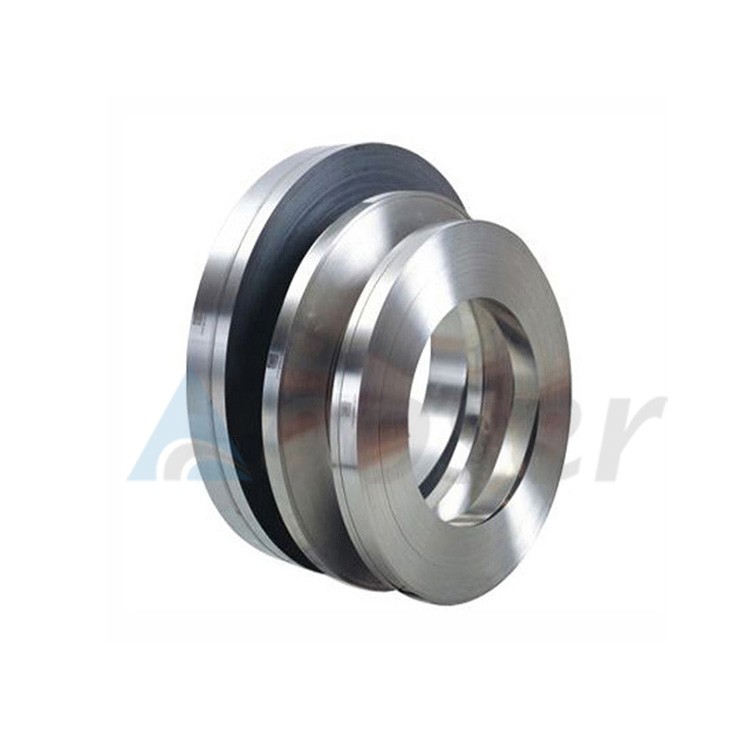
310S stainless steel foil, an austenitic chromium-nickel alloy known for its exceptional high-temperature resistance and oxidation stability, is now being positioned as a superior alternative for these demanding applications.
Uncompromised Stability Under Thermal Stress
310S stainless steel (UNS S31008) contains approximately 25% chromium and 20% nickel, providing it with a distinct advantage over traditional materials. Unlike aluminum, which has a melting point around 660°C, 310S maintains excellent creep strength and oxidation resistance even at temperatures exceeding 1000°C.
This characteristic is particularly vital for the manufacturing process of oxide-based solid-state batteries, where cathode composites often require high-temperature co-firing to achieve proper ionic conductivity. According to recent technical papers presented at international battery conferences, manufacturers utilizing 310S foil have reported fewer micro-cracks and reduced interfacial resistance compared to traditional foils when subjected to sintering temperatures.
“The shift toward solid-state architectures demands materials that can survive the manufacturing process without degrading,” said a senior materials engineer specializing in energy storage. “310S offers the corrosion resistance needed for high-voltage cathodes and the thermal resilience to handle the direct sintering of ceramic electrolytes—something standard aluminum simply cannot do.”
Enhanced Safety in Abuse Scenarios
Beyond manufacturing, 310S foil contributes to operational safety. In the event of internal short circuits or thermal runaway, copper and aluminum collectors can melt, exacerbating the chain reaction. The higher melting point of 310S acts as a robust barrier, maintaining structural integrity for a longer duration and potentially preventing catastrophic cell failure.
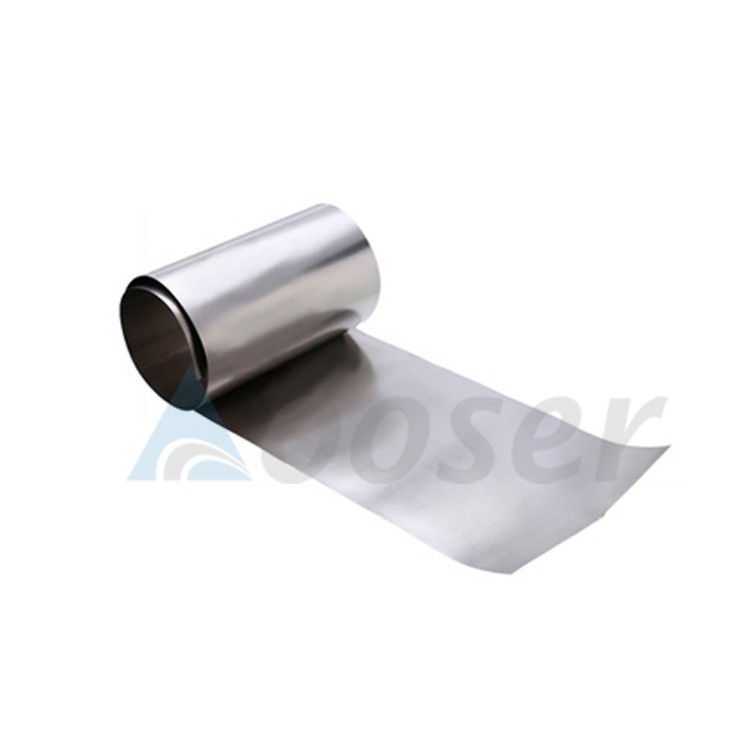
Furthermore, in the context of bipolar battery designs—where multiple cells are stacked in series within a single housing—the high mechanical strength of 310S foil allows for thinner gauge applications without sacrificing structural support. This translates to higher volumetric energy density, a key metric for electric vehicle (EV) and aerospace applications.
Addressing the Cost and Conductivity Equation
While stainless steel exhibits lower electrical conductivity than copper, manufacturers are offsetting this through advanced coating techniques and optimized tab welding processes. The 310S foil is often used as a substrate coated with a thin layer of conductive material (such as carbon or nickel) to ensure low contact resistance.
Additionally, the volatility of copper and nickel prices has prompted supply chain managers to look for alternative chemistries. While 310S contains nickel, its overall material cost stability and longer lifecycle performance are making it an increasingly viable option for premium battery segments, particularly in stationary storage where longevity is paramount.
Market Outlook
Industry analysts note that while stainless steel foil is unlikely to replace copper in standard lithium-ion batteries in the short term, the niche for 310S in advanced manufacturing is expanding rapidly. With the global solid-state battery market projected to grow at a CAGR of over 40% through the 2030s, demand for specialized materials like 310S stainless steel foil is expected to rise correspondingly.
Leading stainless steel mills and precision rolling houses have reported increased inquiries for thin-gauge (10µm to 50µm) 310S foils with tight thickness tolerances and mirror-finish surfaces, designed specifically for vacuum coating processes used in electrode fabrication.
As the industry converges on the dual goals of achieving 500 Wh/kg energy density and “inherently safe” cell designs, 310S stainless steel metal foil appears set to play a critical role in the foundational architecture of tomorrow’s batteries.
About the Material:
310S stainless steel is a fully austenitic heat-resistant alloy. Its low carbon content (max 0.08%) minimizes carbide precipitation during heating, ensuring superior intergranular corrosion resistance in high-temperature environments, making it ideal for critical energy storage components.
Contact: Jason Wang
Phone: 13580725992
E-mail: sales@aooser.com
Whatsapp:13580725992
Add: No.429 Guangming Road, Shenzhen City, Guangdong Province
We chat